Best Gun Cleaning Kits for AR-15 Owners

This article contains affiliate links. If you buy through our links, we may earn a commission at no extra cost to you. Full disclosure.
An AR-15 that’s not cleaned like you mean it will fail when you don’t want it to. Carbon builds. Gas ports clog. Small parts wear. That’s a fact — and the first thing to fix is your kit.
What an AR actually needs
ARs are different from bolt guns. You’re fighting carbon in the bolt carrier group, gas key and gas tube, plus copper and lead in the bore. That means you need tools for scrub-and-scrape, a solid bore system, patch/rod options, a way to reach through the chamber and a dependable CLP or solvent and lubricant. Pocket kits that only come with a tiny brush and a rag are for show.
Field kit: what to carry
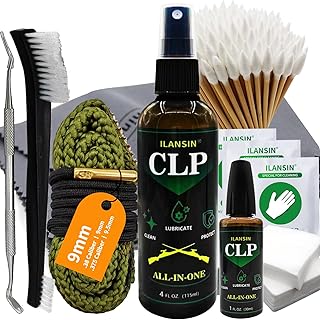
Simple. If you own an AR you should carry: a bore snake sized for .223/5.56, a small bottle of CLP like Break-Free, a chamber brush, a nylon brush, several microfiber rags or patches, and a set of picks/Q-tips. That covers emergency bore clearing, a quick wipe of the BCG, and a field lube. Nothing fancy. Quick, light, effective.
Shop kit: the heavy hitters
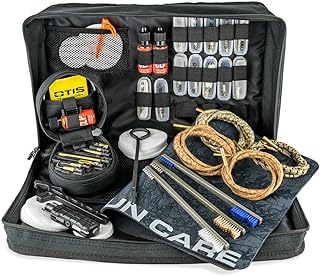
Otis AR-specific kits — Otis builds cleaning kits around AR needs. They include a bore guide alternative, bronze brushes, jags, segmented rods for the barrel, and parts brushes. Solid all-in-one. Good for regular maintenance and portable enough for the range bag.
Dewey rods — For anyone who cares about accuracy, use a one-piece rod or Dewey’s precision rods. They don’t wobble and they won’t score your bore. Pair with quality jags and patches. If you push patches clean, that’s how you measure progress.
Clenzoil and similar caliber-specific kits — Clenzoil makes kits that match calibers and include solvent, brushes, and adapters. They’re practical and come with enough consumables so you can actually finish the job without hunting for parts.
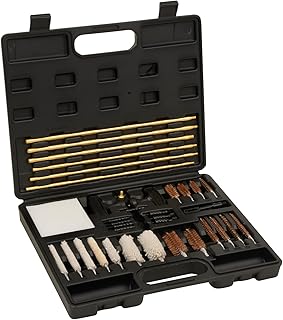
Tipton/Real Avid master kits — These are good starter-to-intermediate kits. They include rods, multiple brushes, picks, and cases. Not boutique, but they don’t pretend to be. Useful for an owner who wants one box that does most tasks.
Carbon scrapers and dedicated BCG tools — Don’t skip a carbon scraper and a set of picks. Toothbrushes won’t remove heavy carbon in the tail of the bolt or the carrier cam. Tools from reputable makers (Real Avid, Wheeler, Lyman) remove nasty build-up without cutting up components.
Bore snake — Don’t hate the bore snake. It’s fast and useful between full cleans. It doesn’t replace a rod-and-patch session for copper removal, but it will remove fresh fouling and get you back in the fight.
Solvents and lubes: keep it practical
Stop overthinking this. Break-Free CLP is a field-proven workhorse. Use a solvent for heavy carbon and a quality lubricant for moving parts. Grease the gas rings lightly, lube the carrier rails, and don’t flood the gas key. Keep a small bottle on the range and a full kit at home.
Buyer mistakes I see
People buy flashy kits with plastic tools that break in a month. Or they load up on solvents and forget the basics: rod quality and brushes. Also, one-size-fits-all kits that ignore the AR’s gas system are useless. Buy tools that fit the job, not the shelf.
My read on this: buy a decent AR-specific kit (Otis or Tipton), add a Dewey rod if you care about accuracy, grab a quality carbon scraper, and keep a bore snake and Break-Free CLP in your range bag. Clean on a schedule: basic wipe and CLP after a few mags; full strip and scrub after a range session or 500–1,000 rounds depending on ammo and conditions.
What this means and what to do about it: stop treating cleaning like an option. Build a kit you will use. Get the right tools, learn the steps, and keep spares of patches and brush heads. Do that and your AR will run when you need it to. Ignore this and you’ll find out how fast a rifle can go from reliable to paperweight — usually at the worst possible moment.